All unitsUnit 1 of 5
The origin and evolution of Indian psychology
Where did Indian ideas about the mind come from, how did they become a field of modern psychology, and what makes them different?
What the syllabus says (9 teaching hours)
Ancient form and absence of nomenclature; development of Indian Psychology as a discipline; philosophy and psychology; biological, socio-cultural and indigenous perspectives; scientific-paradigm debate; worldview and perspectives on reality.
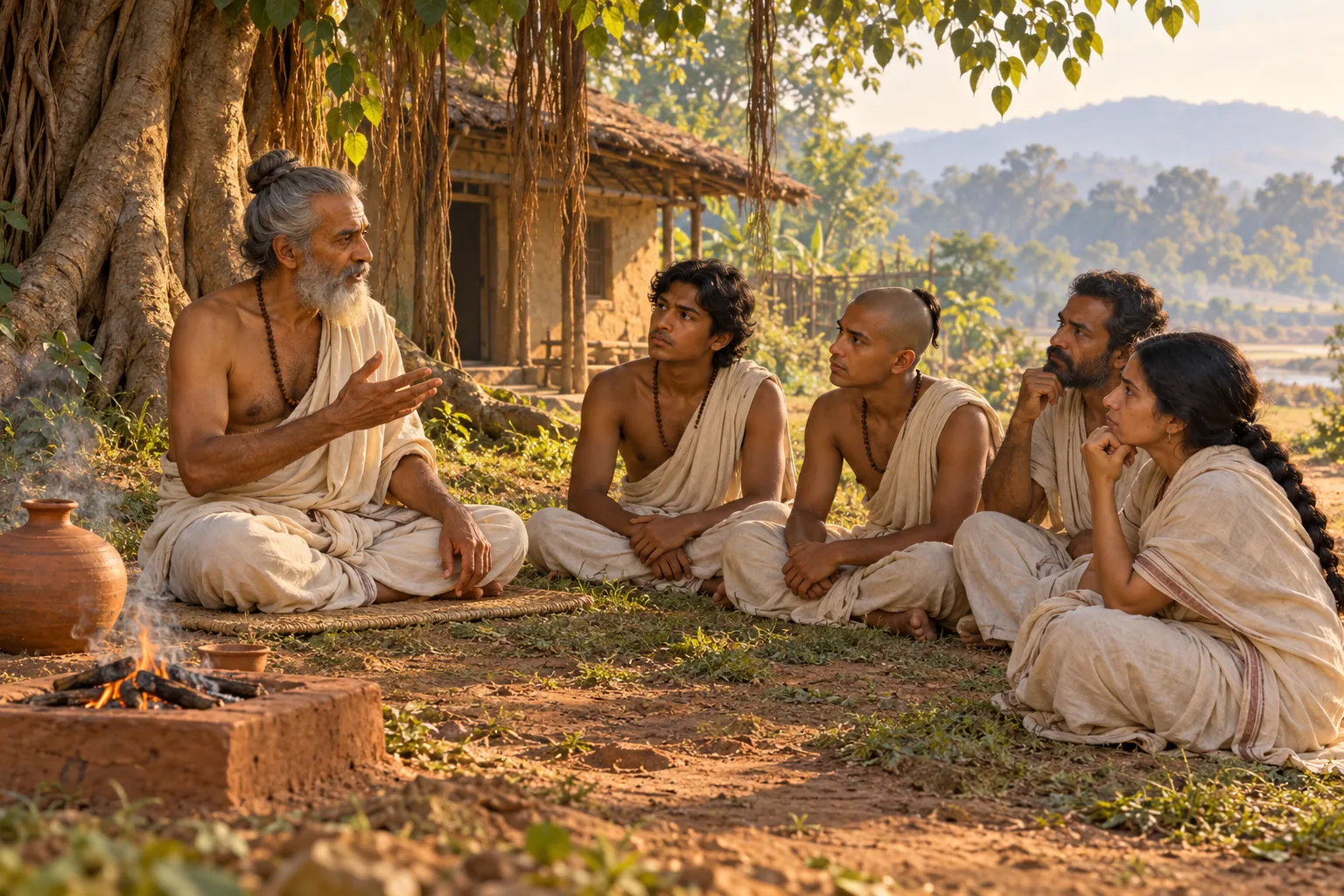 Illustration
Psychology arrived in Indian universities from Europe and America a little over a hundred years ago: a syllabus and a small laboratory at Calcutta University in 1905, and the first department there in 1916. But people in India had been thinking carefully about the mind for close to three thousand years before that. They wrote about perception, memory, emotion, desire, the self, and how to live without needless suffering. They never called this work "psychology". It sits inside texts on philosophy, religion, medicine, ethics and drama.
This unit tells both stories. It shows where the old ideas are found and why they had no separate name. It follows modern psychology in India from its colonial start, through a period of copying Western research, to the call for a psychology that fits Indian life, and to the movement that calls itself Indian psychology. Then it looks at the questions underneath the whole field: how psychology relates to philosophy, whether Indian psychology can be a science, and what picture of reality it rests on.
Unit 1 is the foundation for the rest of the course. Words you meet here, such as manas, dharma, karma and moksha, return in every later unit, so take time with the word cards and the glossary.
Start reading: Before you begin The whole unit takes about 390 minutes to read. Each topic page takes 20 to 35 minutes, so plan one or two pages per sitting.
What is in this unit
Start here
Syllabus topics
- Ancient forms Where ideas about the mind live in the old Indian texts, why there was never a subject called "psychology", what the knowledge was called instead, and when the modern names arrived. Syllabus: Ancient form and absence of nomenclature
- Becoming a discipline How Western psychology arrived in India in 1905 and 1916, why Indian psychologists grew unhappy with copying it, and how the Indian psychology movement and recent policy followed. Syllabus: Development of Indian Psychology as a discipline
- Philosophy and psychology How psychology split from philosophy in the West, why it never split in classical India, and where today's Indian psychology draws the line between big claims about reality and claims that can be studied. Syllabus: Philosophy and psychology
- Three perspectives Three ways of studying the Indian mind, through the body, through society and culture, and through India's own concepts, with what each can and cannot show. Syllabus: Biological, socio-cultural and indigenous perspectives
- The paradigm debate What science and a paradigm are, how writers on Indian psychology contrast their approach with mainstream psychology, the best arguments on both sides, and what the evidence so far can and cannot show. Syllabus: Scientific-paradigm debate
- Worldview What a worldview is, the themes most Indian traditions share, how they compare with the modern Western picture, and what research says these beliefs do to people. Syllabus: Worldview
- Perspectives on reality How the classical Indian schools disagree about what is ultimately real, Advaita's levels of reality, the four states of consciousness and the five layers of the person. Syllabus: Perspectives on reality
- Basic concepts Eleven basic ideas of Indian psychology, from sukha to rta, each set beside an idea from Western positive psychology, with where each match holds, where it breaks, and what the evidence shows. Syllabus: Worldview and perspectives on reality
Study tools
- Practice Seventeen new situations that ask you to use the ideas of Unit 1, and five exam-style questions with answer plans.
- Multiple-choice test Multiple-choice questions on every topic page of Unit 1, marked as you go or at the end, with an explanation and a link back to the guide for each answer.
- Applied cases Nine longer cases that join ideas from several topics of Unit 1, each with a box for your answer, a checklist of points and a model answer.
- Revision sheet The key points of every Unit 1 page in short sentences, with tables of dates, comparisons and who said what.
- Sources How Unit 1 was researched and checked, the corrections it makes to dates and claims in the course books, and the full list of works it cites.
Sanskrit and Pali words in this unit
Each word links to its glossary entry, with its meaning, its spelling in Devanagari and a guide to saying it.
- abadhitaअबाधित
- abhava vairagyaअभाव वैराग्य
- Abhidhammaअभिधम्म
- abhimanaअभिमान
- abhyasaअभ्यास
- adhyatma vidyaअध्यात्मविद्या
- adhyavasayaअध्यवसाय
- Advaita Vedantaअद्वैत वेदान्त
- aham brahmasmiअहं ब्रह्मास्मि
- ahamkaraअहंकार
- ahimsaअहिंसा
- ajivaअजीव
- anandaआनन्द
- anasaktiअनासक्ति
- anattaअनत्ता
- anekantavadaअनेकान्तवाद
- aniccaअनिच्च
- antahkaranaअन्तःकरण
- anubhavaअनुभव
- anumanaअनुमान
- anviksikiआन्वीक्षिकी
- apara vidyaअपरा विद्या
- arthaअर्थ
- asanaआसन
- ashramaआश्रम
- ashtanga yogaअष्टाङ्ग योग
- astikaआस्तिक
- atma vidyaआत्मविद्या
- atmanआत्मन्
- atmanivedanaआत्मनिवेदन
- avidyaअविद्या
- Ayurvedaआयुर्वेद
- Bhagavad Gitaभगवद्गीता
- bhaktiभक्ति
- bhavaभाव
- Brahmanब्रह्मन्
- buddhiबुद्धि
- Charaka Samhitaचरकसंहिता
- Charvakaचार्वाक
- chittaचित्त
- darshanaदर्शन
- desh-kala-patraदेश-काल-पात्र
- dharanaधारणा
- dharmaधर्म
- Dharmashastraधर्मशास्त्र
- dhyanaध्यान
- doshaदोष
- dukkhaदुक्ख
- Dvaita Vedantaद्वैत वेदान्त
- gunaगुण
- guruगुरु
- Ishvaraईश्वर
- jagratजाग्रत्
- jivaजीव
- jivanmuktiजीवन्मुक्ति
- jnanaज्ञान
- kaivalyaकैवल्य
- kalpaकल्प
- kamaकाम
- kaphaकफ
- karmaकर्म
- karma yogaकर्मयोग
- kleshaक्लेश
- koshaकोश
- loka sangrahaलोकसंग्रह
- Mahabharataमहाभारत
- mahavakyaमहावाक्य
- mananaमनन
- manasमनस्
- manovijnanaमनोविज्ञान
- margaमार्ग
- mayaमाया
- Mimamsaमीमांसा
- mokshaमोक्ष
- Narada Bhakti Sutraनारदभक्तिसूत्र
- nastikaनास्तिक
- Natyashastraनाट्यशास्त्र
- nididhyasanaनिदिध्यासन
- nirvanaनिर्वाण
- nishkama karmaनिष्काम कर्म
- niyamaनियम
- Nyayaन्याय
- pancha koshaपञ्चकोश
- para vidyaपरा विद्या
- paramarthikaपारमार्थिक
- pittaपित्त
- prajnaparadhaप्रज्ञापराध
- prakritiप्रकृति
- pramanaप्रमाण
- pranaप्राण
- pranayamaप्राणायाम
- pratibhasikaप्रातिभासिक
- pratityasamutpadaप्रतीत्यसमुत्पाद
- pratyaharaप्रत्याहार
- pratyakshaप्रत्यक्ष
- punarjanmaपुनर्जन्म
- Puranaपुराण
- purushaपुरुष
- purusharthaपुरुषार्थ
- rajasरजस्
- rasaरस
- Rig Vedaऋग्वेद
- rishiऋषि
- rtaऋत
- sadhanaसाधना
- sakshiसाक्षी
- samadhiसमाधि
- samatvaसमत्व
- samsaraसंसार
- samskaraसंस्कार
- sankalpaसङ्कल्प
- Sankhyaसांख्य
- santoshaसन्तोष
- sat and satyamसत्, सत्यम्
- Sat Chit Anandaसच्चिदानन्द
- satiसति
- sattvaसत्त्व
- sevaसेवा
- shabdaशब्द
- shastraशास्त्र
- shraddhaश्रद्धा
- shravanaश्रवण
- shravana, manana, nididhyasanaश्रवण, मनन, निदिध्यासन
- shrutiश्रुति
- siddhiसिद्धि
- skandhaस्कन्ध
- smashana vairagyaश्मशानवैराग्य
- smritiस्मृति
- sthitaprajnaस्थितप्रज्ञ
- sukhaसुख
- sushuptiसुषुप्ति
- sutraसूत्र
- svabhavaस्वभाव
- svadhyayaस्वाध्याय
- svapnaस्वप्न
- svatah pramanyaस्वतःप्रामाण्य
- syadvadaस्याद्वाद
- tamasतमस्
- Tantraतन्त्र
- tapasतपस्
- tarkaतर्क
- tattvaतत्त्व
- Tripitakaत्रिपिटक
- turiyaतुरीय
- Upanishadउपनिषद्
- vairagyaवैराग्य
- Vaisheshikaवैशेषिक
- varnaवर्ण
- Varnashramaवर्णाश्रम
- vataवात
- Vedaवेद
- Vedantaवेदान्त
- vidyaविद्या
- vivekaविवेक
- vrittiवृत्ति
- vyavaharikaव्यावहारिक
- yamaयम
- Yogaयोग
- Yoga Sutraयोगसूत्र
- yogi pratyakshaयोगिप्रत्यक्ष
- yugaयुग